Introduction
Has your mum ever had a full conversation with you using just her eyes and head? One look, and you already know if you should stop talking or stop what you are doing. You didn’t learn this in school. Nobody taught you. You just knew. Congratulations, you’ve already had your first Yorùbá lesson.
The Yorùbá are the third largest ethnic group in Africa. In Nigeria alone, the Yorùbá make up about 20.7% of the population, making them one of the country’s three major ethnic groups alongside the Hausa and Igbo.
Through their art, music, language, and traditions, they have influenced cultures around the world.
In this post, you’ll learn about the story, culture, and values of the Yoruba people. Let’s get into it.
Where did the Yorùbá come from?
In the history of the Yorùbá, it is believed they originated in Ile-Ife, a city in Osun State, Nigeria. To them, Ile-Ife is the place where life on Earth began.
At the centre of this story is Odùduwà, who is regarded as the father and first ancestor of the Yorùbá. According to tradition, Odùduwà was sent from heaven to create solid land and begin human life. The legend says he came down to earth on a long chain and landed in Ile-Ife, where he formed the first solid ground and planted the first seed. This marked the beginning of Yorùbá civilisation and the start of Yorùbá kingship.
Another version of the story says that Odùduwà led the Yorùbá people to their present location after moving from the east because of political conflicts linked to the spread of Islam. However, the exact place referred to as “the east” is not clearly known.
Over time, the Yorùbá built strong kingdoms and large cities. By the 11th century, cities such as Oyo, Ile-Ife, and Ijebu-Ode had become important centres for trade, leadership, and art.
Among these kingdoms, the Oyo Empire became the most powerful, known for its strong army, organised leadership, and wide trade networks. Its major city, Ibadan, is now one of Africa’s largest cities.
Where do Yorùbá people live today?
Most Yorùbá people live in southwestern Nigeria, across states like Lagos, Oyo, Ogun, Osun, Ondo, and Ekiti. But the culture and language travel far beyond the southwestern region. You’ll find Yorùbá communities in other Nigerian states like Kwara, Kogi, and Edo.
Today, Yorùbá people live far beyond Nigeria’s borders. In West Africa, they can be found in countries like Benin Republic, Togo, Ghana, and the Ivory Coast. Across the Atlantic, centuries of migration and the transatlantic slave trade brought Yorùbá people to the Americas, in places like Brazil, Cuba, Trinidad and Tobago, Haiti, and the United States.
They carried their music, language, and spiritual traditions with them. In Brazil, these traditions evolved into the religion Candomblé, in Cuba into Santería, and in Haiti into Vodou. Today, millions of people continue to practice these religions, preserving a living connection to their Yorùbá roots.
What is the Yoruba family culture?
Like many cultures, the Yorùbá believe family is everything. Family isn’t just your nuclear family. It includes grandparents, aunties, uncles, cousins, and in-laws. If you’re connected by blood or marriage, you’re part of the family.
Many Yorùbá families live in a shared compound called agbo ilé, where several relatives stay together. Children grow up surrounded by care, guidance, and support from different people.
If your mum is not around, your aunt steps in. If your dad is busy, your uncle guides you. You are always supported.
There is a popular saying, “Ẹni kan kì í dágbó ṣe.” It means no one can live or grow alone.
In simple terms, you are never on your own in the Yoruba culture.
How do you greet in Yorùbá?
In Yorùbá culture, greeting shows respect. It tells people you were raised well. You don’t walk past an older person without saying something.
Boys greet by prostrating. They lie flat on the ground with their chest facing down. Girls kneel on both knees. While greeting, you avoid looking an elder straight in the eye because it is seen as disrespectful.
Greeting is part of everyday life in Yoruba culture. You greet in the morning, afternoon, and evening. You also greet during special moments like celebrations, when someone is travelling, when a baby is born, or when someone is unwell.
Here are a few simple greetings you can learn and start using right away.
Good Morning (Ẹ kú àárọ̀):
Say this in the morning when greeting elders or a group. With friends, you can say Kú àárọ̀.
Good Afternoon (Ẹ kú ọ̀sán):
Use this from around noon until late afternoon.
Good Evening (Ẹ kú irọ̀lẹ́ / Ẹ káalẹ́):
Use this in the evening.
How are you? (Báwo ni?):
This is a simple greeting you can use at any time.
Thank you (Ẹ ṣe / Ẹ ṣeun):
Ẹ ṣeun sounds more polite. With friends, you can say O ṣe.
Welcome (Ẹ káàbọ̀):
Say this when someone enters your home or space.
Goodbye (Odàbọ̀ / Ó dàbọ̀):
This means “we will see again.”
How do Yoruba people name their children?
The Yorùbá naming ceremony is called Ìsọmọlórúkọ and happens 8 days after a baby is born. In Yorùbá culture, a name tells a story. It reflects how the family feels, what they believe, and the hopes they have for the child.
Some names are also given based on the circumstances of a child’s birth. These are called Orúko Àmútọ̀runwá, or pre-destined names. For example, twins are named Taiwo (“taste the world”) and Kehinde (“the one who comes last”).
Other children born after twins or in special situations may be named Idowu (the child born immediately after twins), Ige (child born feet first), or Abiona (child born when the mother is away from home). These names are considered the child’s first gift and a guide for life.
The naming ceremony is a celebration where family and friends gather to welcome the baby, offer prayers, and share joy. An elder leading the ceremony uses special symbolic items to bless the child and express hopes for a good future.
Here are the items and their meanings:
- Obi (Kolanut): Protects the child from evil and sickness.
- Oyin (Honey): Brings sweetness and joy to life.
- Ata (Pepper): Ensures a fruitful and productive life.
- Eja (Dried Fish): Keeps the child connected to their roots and people.
- Iyo (Salt): Adds happiness, flavour, and substance to life.
- Oti (Alcohol): Brings honour and respect.
- Omi (Water): Keeps the child free from enemies and obstacles.
- Epo (Palm Oil): Makes life smooth and easy.
- Orogbo (Bitter Kola): Blesses the child with long life.
You can actually learn a lot about Yorùbá culture just by paying attention to names.
What is the Yoruba traditional belief?
The Yorùbá have a traditional belief system that has influenced cultures beyond West Africa. At the centre is Olodumare, also called Olorun. Olodumare is all-powerful and doesn’t have a specific gender. They usually don’t get involved in daily life, but people can reach Olodumare by asking the Orishas for help.
The Orishas are spirits who take care of different parts of life. For example, Ṣàngó controls thunder, Ọṣun guides rivers and love, Ògún rules iron and strength, Obatala shapes people, and Yemoja is the mother of waters.
The Yorùbá also believe in Ayanmo, which means destiny. They believe that everyone has a path in life, and the goal is to grow closer to Olodumare, the source of all people.
To understand their Ayanmo and make important decisions, Yorùbá people consult Ifa, a system of divination. Babalawo, the priests, interpret Ifa and give guidance to help people make wise choices.
Today, many Yorùbá are Christian or Muslim, but some still keep their traditional beliefs while practising these religions.
How do Yorùbá people get married?
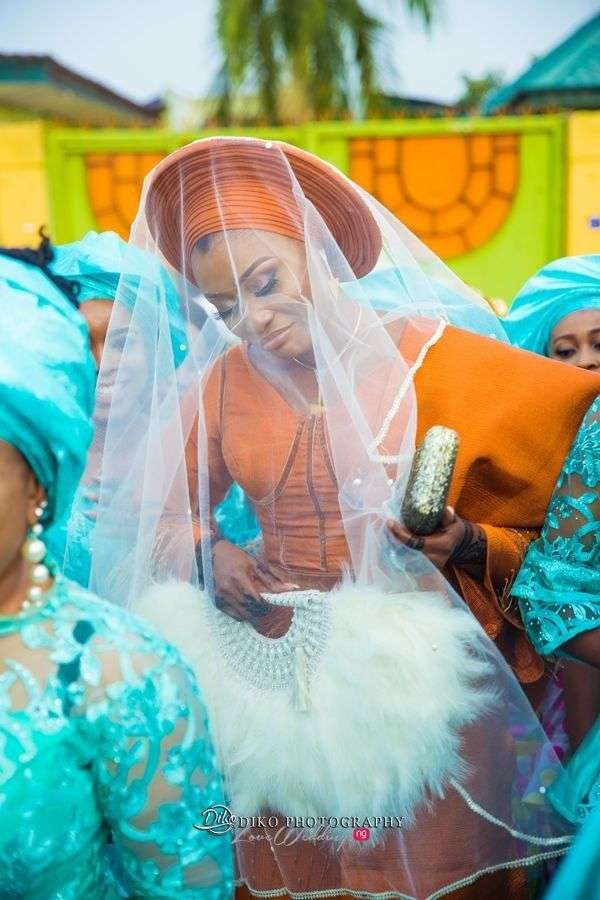
A Yorùbá wedding is a celebration that brings two families together, and it starts long before the wedding day.
When a man is interested in a woman, he does not approach her directly. He finds an Alarina, an intermediary, usually a friend or family member, who passes the message. If she is interested, her family steps in. They look into the man, his family, and his background. When they are happy with what they find, things move forward.
The first step is the Introduction Ceremony, called “Mo mi i mo e”, which translates to “let me know you, let you know me.” This is the formal meeting where both families introduce themselves and approve the marriage.
Then there’s the Engagement Ceremony, Idana. The bride’s family writes a list of what they want, called Eru Iyawo. The groom’s family shows up with everything on it—yams, honey, kola nuts, Schnapps, envelopes of money, and the bride price.
At the engagement, the groom and his friends lie flat on the ground in front of the bride’s family. This is called Idobale. It is their way of requesting their daughter’s hand in marriage.
After that, the bride is brought out with a veil and unveiled. Her friends walk her in while her praises are sung. This moment is called Afihan Iyawo.
Many couples also have a church or mosque wedding after all of this.
What are the popular Yoruba festivals?
Yorùbá people love to celebrate, and when it’s festival time, they go all out. Families and friends wear matching clothes called Aso-ebi, streets fill with music, dancing, and colours, and everyone has a good time.
Take the Osun-Osogbo Festival. Every August in Osogbo, people from around the world come to honour Ọṣun, the goddess of rivers and love. The festival lasts for two weeks with prayers, dancing, and special ceremonies. It’s so special that UNESCO recognises it as an Intangible Cultural Heritage.
Then there is the Eyo Festival in Lagos. The streets are filled with people in long white robes, tall hats, and carrying sticks, all moving together in a parade. It’s full of life and excitement. You can see more of it here.
Another exciting festival is the Ojude Oba Festival in Ogun State. It’s a celebration for the king with colourful clothes, music, and parades.
In Oyo State, the Sango Festival honours Ṣàngó, the god of thunder. People celebrate with drumming, dancing, and colourful outfits. Click here to know more about this lively festival.
The Egungun Festival is a way to remember and honour ancestors. People wear special costumes, dance, and play drums to celebrate their family history.
In Ile-Ife, the Olojo Festival is all about the king. After days of prayer, he wears a sacred crown, visits holy sites, and prays for peace in Yorùbá lands.
Finally, the New Yam Festival celebrates the harvest. People thank God and their ancestors for a good crop. It happens between June and August in places like Ekiti, Ondo, and Kogi. Markets are full of fresh yams, and everyone joins the fun. See more about it here.
Yorùbá festivals are full of colour, music, and joy. They show the rich culture, history, and traditions of the Yorùbá people, and each one is worth experiencing.
What are the daily customs of Yorùbá people?
The Yorùbá use proverbs a lot in everyday conversation. They use them to tell stories, settle disputes, or give advice. Each proverb carries a lesson. They call proverbs “Òwe” and say “Òwe l’ẹṣin ọ̀rọ̀,” which means “proverbs are the horses of speech.”
When it comes to food, different Yorùbá groups have their own special dishes.
In Oyo and Ibadan, people enjoy Àmàlà, which is made from yam, cassava, or plantain flour. They usually eat it with Ewedu (jute leaf soup) and Gbegiri (bean soup).
In Ijebu areas, popular foods include Ẹ̀bà (dried grated cassava) or Ebiripo (grated white cocoyam) served with Egusi soup, and Ìkòkòrè (water-yam pottage).
For breakfast or snacks, people like Akara (fried bean cakes), Moi Moi (steamed bean pudding), and Puff-Puff (sweet fried dough). Ewa aganyin, which is mashed beans with spicy sauce, is a common street food.
During celebrations and special gatherings, Ofada rice served with green pepper stew is popular.
Yorùbá people love fashion. You can’t talk about their daily life without mentioning the clothes they wear. Their attire shows Yorùbá pride. Men wear Agbádá (flowing gown) with a Fìlà (cap). Women wear Ìró (wrapper) and Bùbá (blouse), with a Gèlè (head tie). Each outfit shows a person’s age, status, or the occasion they are attending.
Conclusion
The Yorùbá people have a history spanning thousands of years, a culture present on every continent, and traditions celebrated by millions today.
As you learn the Yorùbá language, you are not just learning words. You are connecting with the people, their history, and their way of life. That connection becomes deeper when you have the right guidance.
Our classes help you master Yorùbá at your own pace, from beginner to advanced level. You will study vocabulary for daily conversations, pronunciation with correct tones, common phrases, and the cultural meaning behind the language. Visit our website to see our class options and begin today.