Imagine discovering that one simple decision could add 50+ points to your Canadian immigration profile. Not a new degree, not a job offer, just one exam.
That is the power the TEF exam quietly carries. Many people don’t realise how much French can influence their CRS score until they see the numbers jump. And if you’ve ever wondered why French suddenly becomes a hot topic once Canada enters the picture, you’re about to understand it clearly.
This blog breaks down everything you need to know about the TEF exam, what it is, how it works, what to expect, and how to start preparing without feeling overwhelmed.
Let’s dive in.
1. What is the TEF examination?
The TEF (Test d’Évaluation de Français) is an international benchmark test that measures your French language proficiency. It was created in 1998 by the French Language Centre of the Paris Chamber of Commerce and Industry (CCI Paris Île-de-France).
The TEF exam is widely used for several purposes, such as:
- Applying for French or Swiss nationality (TEF Naturalisation)
- Québec immigration (TEFAQ)
- Applying for a French residency card (TEF Résidence)
- Proving French skills for academic or professional reasons
2. Difference between TEF and TEF Canada
You’ve likely heard about both TEF and TEF Canada and might be wondering how they differ. TEF Canada is a specialised version of the TEF exam designed specifically for use by Immigration, Refugees and Citizenship Canada (IRCC) for immigration, citizenship, and Express Entry applications.
While the general TEF exam assesses overall French proficiency, TEF Canada is tailored to meet Canadian immigration criteria. Both tests evaluate the same core language skills, but TEF Canada follows a format and scoring system aligned with Canadian standards.
Since 2002, the Canadian government has officially recognised TEF Canada as valid proof of French language proficiency for immigration purposes.
3. TEF exam format
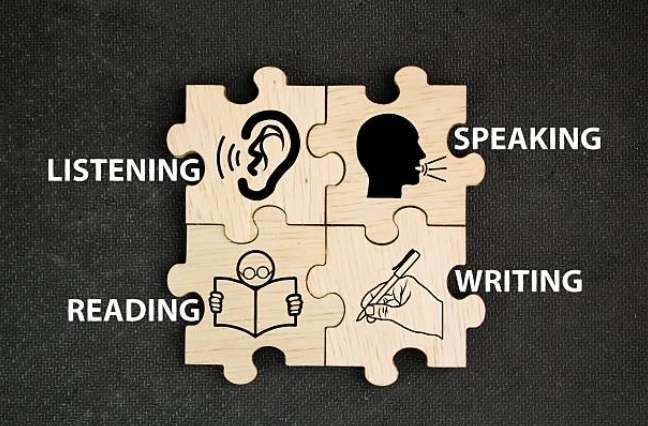
The TEF exam format includes four main sections: Listening, Reading, Writing, and Speaking.
Listening comprehension
This section measures your ability to understand spoken French through audio materials. You will answer 40 questions divided into 4 parts within 40 minutes. The format is multiple choice; for each question, you will listen to an audio clip and select the correct answer. Each correct answer scores 1 point; incorrect or unanswered questions score zero.
Reading comprehension
This section tests your ability to read and understand written French documents. There are 40 multiple-choice questions divided into 4 parts, to be completed within 1 hour. Scoring is the same as the listening section.
Written expression
You will express yourself in written French across two parts within 1 hour:
- Section A (25 minutes): Write the continuation of an article (minimum 80 words).
- Section B (35 minutes): Express and justify a point of view in an argumentative essay (minimum 200 words).
Oral expression
This measures your spoken French communication skills in a conversation with an interlocutor. The oral exam takes 15 minutes:
- Section A (5 minutes): Obtain information.
- Section B (10 minutes): Express and defend an argument to convince your interlocutor.
TEF–CLB equivalency (updated 2025)
Here’s how your TEF exam scores translate into Canadian Language Benchmark (CLB) levels:
| CLB Level | TEF Reading (Score/300) | TEF Listening (Score/360) | TEF Writing (Score/450) | TEF Speaking (Score/450) |
|---|---|---|---|---|
| CLB 4 | 121–150 | 145–180 | 181–225 | 181–225 |
| CLB 5 | 151–180 | 181–216 | 226–270 | 226–270 |
| CLB 6 | 181–206 | 217–248 | 271–309 | 271–309 |
| CLB 7 | 207–232 | 249–279 | 310–348 | 310–348 |
| CLB 8 | 233–247 | 280–297 | 349–370 | 349–370 |
| CLB 9 | 248–262 | 298–315 | 371–392 | 371–392 |
| CLB 10+ | 263–277+ | 316–333+ | 393–415+ | 393–415+ |
4. How to register for TEF in Nigeria
To register for the TEF exam in Nigeria, you can do so through official test centres, usually at Alliance Française locations in Lagos, Abuja, or Port Harcourt. Registration can be done online or in person. You will need a valid ID (passport or national ID), a passport photograph, and to complete the registration form. After that, you choose your preferred test date based on availability.
5. How much is the TEF exam in Nigeria? a full TEF exam cost breakdown
The cost of the TEF exam in Nigeria varies due to inflation and currency changes, but it is currently around ₦750,000, according to Alliance Française Nigeria.
It’s important to know what affects the total cost:
- Type of TEF exam: There are different versions, such as TEF Canada, TEF General, TEF Naturalisation, and TEFAQ, and each has its own fee.
- Rescheduling fees: Changing your exam date can cost between ₦50,000 and ₦100,000.
- Study and preparation costs: Materials, online courses, and private tutoring increase expenses.
- Administrative fees: Some centres charge ₦10,000 to ₦20,000 for processing.
Why the TEF exam in Nigeria is expensive
Factors include inflation, operational costs like rent and salaries, high demand since TEF is a popular route for Canadian immigration, and currency exchange fluctuations.
Extra costs you might not expect
- Rescheduling fees as noted above.
- Study materials such as textbooks (₦10,000–₦30,000), online courses (₦50,000–₦150,000), and private tutoring (₦5,000–₦15,000 per session).
- Administrative fees depend on the test centre.
6. How to prepare for the TEF exam
- Check your French level and join a class
- If you’re a beginner, start with French classes to build a strong foundation.
- Use apps like Duolingo to practice vocabulary and listening every day.
- Get an expert TEF tutor to guide you and give personalised feedback.
- Learn the TEF exam format
- Know the sections: listening, reading, speaking, and writing.
- Understand the types of questions and time limits for each part.
- Practice with timed tests
- Take full practice exams to improve speed and confidence.
- Focus on answering correctly within the time allowed.
- Use trusted study materials
- Use official resources and sample papers to prepare.
- Avoid unreliable materials that may confuse you.
- Start with PrepMeWell
- Check out PrepMeWell for practice tests, guides, and expert coaching designed for TEF.
Frequently Asked Questions
Can I clear my TEF in 3 months?
You can’t become fluent in French in just 3 months. To pass the TEF exam, it usually takes about 10–12 months of steady, dedicated study. But you can definitely start preparing and making real progress within that time.
Can you retake one section of TEF?
Yes, you can. If your previous score didn’t meet your expectations, you’re allowed to retake one or more sections to improve your results.
What should I bring on the day of the TEF exam?
Bring a valid photo ID (usually your passport or national ID), your registration confirmation, and any materials allowed by the test centre. Food and water are usually okay for breaks.
Can I prepare for the TEF exam online, or do I need in-person classes?
You can do both, but online prep is more convenient and lets you learn on your own schedule. It gives you the flexibility to take classes when it works for you.
Can I use my TEF results for purposes other than Canadian immigration?
Yes! Many use TEF results for university admissions, job applications, or French citizenship.
Conclusion
Now you have a clear understanding of what the TEF exam is, its format, how to register in Nigeria, the costs involved, and how to prepare effectively.
If you find the registration process overwhelming, you don’t have to go through it alone. Many have succeeded with assistance, and you can too. For help with registration or to begin your preparation, feel free to send us a message.